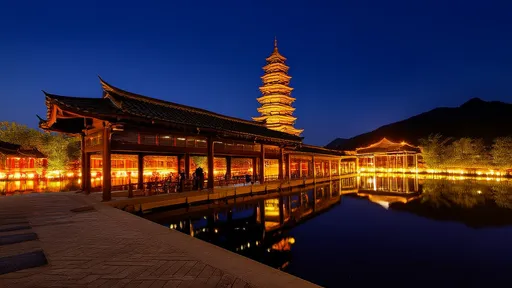
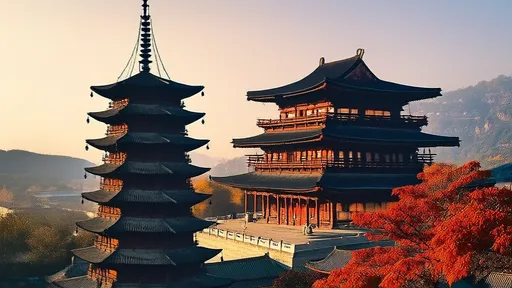
As dusk descends upon Wuxi's Nianhua Bay, a magical transformation begins to unfold. The daytime serenity of this Zen-inspired destination gives way to an extraordinary nocturnal spectacle known as the Nighttime Light Show, where ancient Buddhist philosophy merges with cutting-edge visual technology to create an unforgettable sensory journey. For those planning to witness this mesmerizing display, understanding the optimal viewing and photography positions becomes crucial to fully appreciate this symphony of light, sound, and spirituality.
The Grand Plaza stands as the undisputed champion for immersive viewing experiences. Positioned directly facing the central pagoda that serves as the primary canvas for projections, this location offers an unobstructed panoramic perspective of the entire show. Visitors arriving about thirty minutes before the performance can secure prime spots on the stone benches or along the railings, where the synchronized audio system delivers crystal-clear narration and ethereal music. The strategic placement of lasers and projectors ensures that those in this area experience the full depth of the multidimensional storytelling, with light patterns seeming to dance just arms-length away during particularly dynamic sequences.
Photographers seeking to capture the grandeur of the light show will find the wooden bridge spanning Lotus Lake particularly rewarding during the early minutes of the performance. This vantage point allows for stunning reflection shots where the illuminated structures and laser patterns mirror perfectly on the still waters, effectively doubling the visual impact. Using a tripod is essential here, as longer exposures are necessary to capture both the bright projections and their watery reflections. The bridge's elevation also provides a slightly downward angle that frames the entire scene with surrounding willow trees, adding natural elements to the technological marvel.
For those preferring a more elevated perspective, the tea house on the eastern hill offers a remarkable overlook despite being slightly farther from the main action. The distance actually works to advantage here, allowing wider shots that incorporate multiple elements of the show simultaneously. The pagoda, water screens, and laser arrays all become components of a larger composition rather than individual subjects. This position proves particularly valuable during the finale when all elements combine in a crescendo of light and sound, creating photographs that convey the full scale of the production.
The waterside platforms near the bamboo forest provide an unconventional but visually striking alternative for both viewing and photography. From here, the perspective shifts to more intimate compositions focusing on how light interacts with natural elements. The bamboo groves become backlit silhouettes against colorful projections, while occasional laser patterns filtering through the leaves create dappled light effects that make for uniquely artistic photographs. This location works especially well for those familiar with manual camera settings who can experiment with different exposures to capture the interplay between nature and technology.
Seasoned visitors often recommend the stone pathway circling the main water feature as the ideal spot for capturing dynamic movement in photographs. The strategically placed mist machines along this path create ethereal clouds that catch and diffuse the laser beams, resulting in dramatic light columns that appear almost solid. Photographers using faster shutter speeds can freeze particular moments where light patterns form recognizable shapes through the mist, while slower exposures transform these same scenes into flowing rivers of color. This location requires constant adjustment of camera settings as the density of mist changes throughout the performance.
The performance itself unfolds in distinct chapters, each with its own optimal viewing positions. During the opening water screen projection segment, positions directly facing the artificial waterfall provide the clearest view of the holographic imagery appearing to float above the water. As the show transitions to the architectural mapping phase on the pagoda, moving slightly to the left provides a better angle for appreciating the three-dimensional illusions created on the structure's surfaces. The final laser symphony segment benefits from central positions where the overhead laser patterns can be fully appreciated without neck strain.
Practical considerations significantly impact the viewing experience. Weather conditions play a crucial role, with slightly misty evenings often enhancing the visual drama by making light beams more visible, though heavy rain obviously diminishes the experience. The time of year affects seating availability and sight lines, with summer months requiring earlier arrival to secure prime positions. Comfortable clothing appropriate for evening temperatures ensures that viewers can focus on the spectacle rather than physical discomfort. Many experienced visitors bring small folding stools for flexibility in positioning, particularly for photography purposes where standard seating might not provide the necessary angles.
Photography enthusiasts should consider the technical aspects of capturing the light show effectively. DSLR or mirrorless cameras with wide-aperture lenses (f/2.8 or wider) perform best in the low-light conditions. ISO settings typically range between 800-3200 depending on the specific segment of the show, with shutter speeds varying from 1/30th of a second for capturing movement to several seconds for stationary light patterns. Shooting in RAW format provides greater flexibility in post-processing to recover details from both shadow and highlight areas. Many successful photographers bracket their exposures to ensure they capture the full dynamic range of the scene.
The human element remains crucial in both experiencing and documenting the light show. While technical perfection in photography matters, the emotional impact of being present in the moment should not be sacrificed entirely for the sake of capturing images. The most memorable photographs often come from balancing preparation with spontaneity, using technical knowledge to capture unexpected moments of beauty rather than rigidly sticking to predetermined shots. Similarly, viewers sometimes find that moving between different positions during the performance provides varied perspectives that enhance overall appreciation of the artistic achievement.
As the final lights fade and the echoes of the concluding music dissipate into the night, visitors depart with not just photographs but profound sensory memories. The Nighttime Light Show at Nianhua Bay represents more than technological achievement—it serves as a bridge between ancient spiritual traditions and contemporary artistic expression. Whether viewed from the popular central positions or discovered through unique personal perspectives, this luminous journey continues to inspire awe and reflection long after the last projector darkens.
By /Aug 13, 2025
By /Aug 22, 2025

By /Aug 22, 2025
By /Aug 22, 2025
By /Aug 22, 2025
By /Aug 22, 2025
By /Aug 13, 2025
By /Aug 22, 2025

By /Aug 13, 2025

By /Aug 22, 2025
By /Aug 22, 2025
By /Aug 22, 2025
By /Aug 13, 2025

By /Aug 22, 2025
By /Aug 13, 2025

By /Aug 13, 2025

By /Aug 13, 2025

By /Aug 13, 2025

By /Aug 22, 2025

By /Aug 22, 2025
