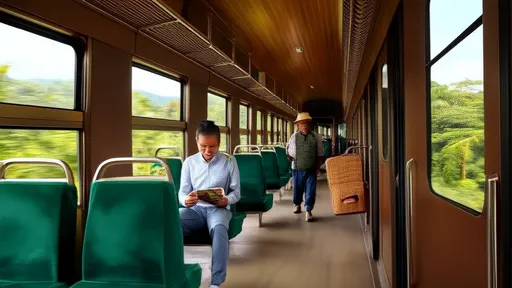
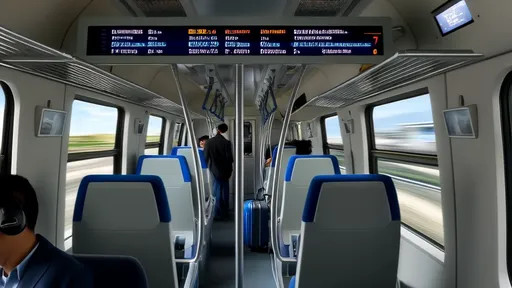
Stepping into the quiet carriage of a high-speed train offers a distinct travel experience, one defined by tranquility and respect for fellow passengers. Unlike standard carriages where the hum of conversation and occasional phone calls form the backdrop of the journey, the quiet carriage is a sanctuary designed for those seeking peace, focus, or simply a break from the constant noise of modern travel. The concept, while simple, requires a shared commitment from everyone on board to maintain its special atmosphere. This guide delves into the essentials, from securing your seat in this serene space to understanding the unwritten contract of silence you enter upon choosing it.
The process of selecting a quiet carriage seat begins long before you board the train, at the moment of booking your ticket. Most major rail operators that offer this service clearly mark these carriages during the online reservation process. You will typically see them labelled explicitly as "Quiet Carriage," "Silent Zone," or with a universal icon of a person with a finger over their lips. It is crucial to pay close attention to these designations when completing your purchase. The location of the quiet carriage can vary depending on the train model and the operator's configuration, but it is often situated away from high-traffic areas like the dining car or the doors connecting carriages to minimize disruptive through-passenger flow.
Once you have identified the quiet carriage option, you will be presented with a seat map. Here, your choice is not just about window versus aisle, but about optimizing for the quietest experience possible. Seats located immediately adjacent to the automatic doors might experience slightly more noise from the swoosh of them opening and closing, though this is usually minimal. A more significant consideration is proximity to other carriages. A seat at the very front or back of the quiet carriage, which shares a wall with a standard carriage, could be subject to more ambient noise bleed. For the utmost serenity, aim for a seat in the middle of the quiet carriage. Furthermore, consider the direction of travel; some seasoned travelers prefer rear-facing seats, finding the view less stimulating and more conducive to relaxation or work.
Upon successfully booking your passage in the quiet carriage, your preparation shifts from logistics to mindset. This is not merely a different seat; it is a different social environment. The core principle governing all behaviour in this space is the conscious minimization of noise. This extends far beyond just avoiding loud phone calls. The successful occupant of a quiet carriage is hyper-aware of every potential sound they might generate and takes proactive steps to mitigate it. This is the social contract you agree to, a pact of mutual consideration for the peace of everyone around you.
The most prominent and non-negotiable rule is the strict prohibition on audible phone calls. This means all mobile phones must be set to silent mode—not just vibrate, as the buzzing can be equally distracting in a near-silent environment. If you must take or make a call, you are expected to leave the quiet carriage entirely, moving to a vestibule area or a standard carriage. Sending text messages or emails is perfectly acceptable, but you must ensure any keypress or alert tones are completely disabled. The glow of your screen, if very bright, can also be a distraction to others trying to rest, so consider dimming it.
Conversation with a travel companion is not outright banned, but it is severely curtailed. Any talking must be conducted in the softest possible whispers, brief, and absolutely essential. This is not the place for catching up on the week's events or having a lengthy discussion. A quick, hushed word to point out something out the window or to decide when to get off is the limit. Extended whispered conversations, while quieter than normal speech, can create a persistent, low-level noise that many find just as irritating. The general rule of thumb is if you can hear your own whisper clearly, it is probably too loud. For any substantive conversation, take it elsewhere.
Personal entertainment is a common way to pass the time on a long journey, but in the quiet carriage, it requires careful management. Watching videos or listening to music or podcasts is permitted only through headphones. However, the choice of headphones is critical. High-quality, noise-cancelling headphones are ideal as they allow you to enjoy your media at a very low volume without being disturbed by external noise yourself. Crucially, you must ensure your headphones are not leaking sound. The tinny hiss of audio escaping from earbuds is a common nuisance. Before your journey, test your headphones at a low volume to ensure they contain the sound completely.
The management of other personal items is another key area of etiquette. Be mindful of anything that could create unexpected noise. Unwrapping a snack slowly and carefully to avoid loud crinkling of plastic or paper is a considerate act. If you are typing on a laptop, a quiet keyboard is essential; the rapid-fire clacking of mechanical keys can be incredibly disruptive. Even turning the pages of a book or newspaper should be done with a measured pace to avoid loud, sharp rustles. The goal is to blend into the background, becoming as acoustically invisible as possible.
For parents travelling with young children, the quiet carriage requires serious consideration. While well-behaved children are not explicitly barred, the environment is inherently unsuited to the unpredictable nature of infants and toddlers. A baby’s cry or a young child's excited chatter, however brief, shatters the tranquility of the carriage and causes significant disturbance. Out of respect for the other passengers who have specifically chosen this carriage for its silence, it is strongly advised that families with young children select standard seating. The same consideration applies to large groups; the quiet carriage is designed for individual or paired quiet travel, not for social gatherings.
Inevitably, there may be a passenger who is either unaware of the rules or chooses to ignore them. In such a situation, the response should be calm and polite. A firm but quiet reminder, such as a gentle "Excuse me, this is the quiet carriage," is often all that is needed. Most people are not being deliberately rude but may have simply forgotten where they are. If the disturbance persists, the correct course of action is to alert the train conductor or a member of the onboard staff. They are trained to handle these situations and will politely remind the passenger of the rules, potentially asking them to move carriages if they are unwilling to comply. It is never advisable to escalate the situation yourself.
Adhering to these guidelines transforms the quiet carriage from a simple train car into a truly restorative travel experience. It becomes a moving oasis of calm, a rare public space where the value of silence is collectively honoured. The benefits are profound: the ability to work with deep focus, to read without interruption, to meditate, or to simply watch the landscape roll by in contemplative peace. The success of this environment hinges entirely on the conscientiousness of each passenger. By choosing the quiet carriage, you are not just buying a ticket; you are making a commitment to contribute to a collective atmosphere of respect and quietude, making the journey better for everyone on board.
By /Aug 13, 2025
By /Aug 22, 2025

By /Aug 22, 2025
By /Aug 22, 2025

By /Aug 22, 2025

By /Aug 22, 2025

By /Aug 13, 2025

By /Aug 22, 2025

By /Aug 13, 2025
By /Aug 22, 2025
By /Aug 22, 2025

By /Aug 22, 2025

By /Aug 13, 2025
By /Aug 22, 2025

By /Aug 13, 2025

By /Aug 13, 2025

By /Aug 13, 2025
By /Aug 13, 2025

By /Aug 22, 2025

By /Aug 22, 2025
