Stepping into a traditional Japanese onsen ryokan is like entering a world where ancient customs and modern comfort converge. It is an experience that engages all the senses—the mineral-rich scent of geothermal waters, the serene rustle of yukata robes, the exquisite artistry of kaiseki cuisine, and the profound tranquility that comes from participating in rituals refined over centuries. However, this immersive cultural experience comes with an unspoken expectation: that guests will navigate its nuances with respect and awareness. To do otherwise is not merely a breach of etiquette; it is to miss the very essence of the ryokan stay, which is as much about inner reflection as it is about outer relaxation.
The journey begins not at the hot springs themselves, but in your assigned guest room. Upon arrival, you will be greeted by staff, often in traditional attire, who will guide you to your space. It is here that you will first encounter the yukata, a lightweight cotton kimono provided for your stay. Do not make the mistake of dismissing it as a simple bathrobe. The yukata is versatile lounge wear, acceptable for moving around the inn's public spaces, and even for venturing out to nearby town streets in some establishments. The correct way to wear it is left side over right. Wrapping it right over left is reserved for the deceased in funeral rites, and making this error can cause serious, albeit silent, offense. The garment should be snug but comfortable, tied with the obi (sash) around the waist.
Before you even think about heading to the baths, a specific preparation ritual must be observed in your room. The onsen is a place of purification, and entering it without first cleansing your body is considered deeply unclean. You are expected to change into your yukata in your room. Most guests will then carry their smaller onsen towel and toiletries with them to the bathing area. It is crucial to understand the separation between soto (outside) and uchi (inside). The genkan (entryway) of your room is a prime example. You must always remove your slippers before stepping onto the raised tatami mat floor, leaving them pointing outward, ready for when you depart. These same slippers are for hallway use only; they are never worn onto the tatami and must be swapped for separate toilet slippers when entering a restroom.
The heart of the ryokan experience is, of course, the onsen bath. Whether you choose the gender-segregated indoor bath (uchiyu) or the often more scenic outdoor rotemburo, the rules are sacred and non-negotiable. Upon entering the changing room, silence your voice. These are zones of quiet contemplation, not social gathering spots. Place your clothing and yukata in a provided basket or locker, taking only your small towel with you. Do not, under any circumstances, enter the main bathing pool yet. Your first stop is the washing station, a row of stools equipped with showers, taps, bowls, and soap.
Here, you must thoroughly shower and scrub your entire body while seated on the stool. This ensures no soap or suds contaminates the shared bathing water. Every last bit of shampoo and soap must be rinsed off. Your small towel can be used to aid your washing, but it must never touch the clean water of the bath. You will see some locals place the towel on their head while soaking, a practical habit that keeps it dry and out of the way. Now, and only now, are you ready to enter the hot, soothing waters. Enter slowly and quietly, disturbing the water as little as possible. The towel stays out of the water. Soak in silence, allowing your mind to unwind. When you are done, exit the bath and lightly rinse off with fresh water from the shower station to remove the mineral-rich water before drying off and returning to the changing room.
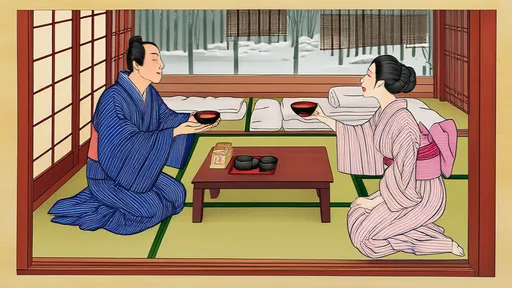
After the profound relaxation of the bath, the culinary journey begins. Dining is typically held in a communal hall or, in higher-end ryokans, delivered directly to your room by a server. Kaiseki ryori is the pinnacle of Japanese haute cuisine, a multi-course meal that is a feast for the eyes and the palate. It emphasizes seasonal, local ingredients presented with artistic flair. Your server will explain each dish as it arrives, though the language barrier can sometimes be a challenge. A simple itadakimasu (a polite phrase said before eating) shows appreciation before you begin.
Navigating the meal requires an understanding of the tableware. Bowls and plates are often beautiful works of art themselves. Lift bowls closer to your mouth when eating rice or soup; it is more polite than bending over the table. Slurping noodles is not only acceptable but is a sign you are enjoying them. However, avoid blowing your nose loudly at the table; if necessary, excuse yourself discreetly. Unlike some other dining settings, it is perfectly fine, even expected, to pick up smaller plates to bring them closer to you. As the meal concludes, expressing your gratitude with gochisosama deshita (thank you for the meal) to the staff is a valued gesture of respect.
The rhythm of a ryokan is a gentle one, dictated by tradition and respect. From the precise way you fold your yukata to the silent communion of the bath and the respectful appreciation of a meticulously prepared meal, every action is part of a larger whole. It is a practice in mindfulness, urging you to be present in every moment and considerate in every action. By embracing these customs, you do not just follow rules; you connect with the core of Japanese hospitality, omotenashi—a selfless, heartfelt service that anticipates a guest's every need. Your adherence to etiquette is the highest compliment you can pay your hosts, ensuring the preservation of this beautiful culture for generations to come.
By /Aug 13, 2025
By /Aug 22, 2025
By /Aug 22, 2025

By /Aug 22, 2025

By /Aug 22, 2025

By /Aug 22, 2025

By /Aug 13, 2025

By /Aug 22, 2025

By /Aug 13, 2025

By /Aug 22, 2025

By /Aug 22, 2025

By /Aug 22, 2025

By /Aug 13, 2025

By /Aug 22, 2025
By /Aug 13, 2025

By /Aug 13, 2025
By /Aug 13, 2025

By /Aug 13, 2025

By /Aug 22, 2025

By /Aug 22, 2025
