The year 2025 has ushered in one of the most polarizing workplace trends in recent memory: the rise of transparent office attire as a direct challenge to traditional business dress codes. What began as avant-garde fashion statements on runways has now infiltrated corporate corridors, boardrooms, and startup hubs worldwide. This sartorial revolution isn't merely about fabric choices—it's sparking heated debates about professionalism, gender norms, and the very definition of workplace appropriateness in our post-pandemic era.
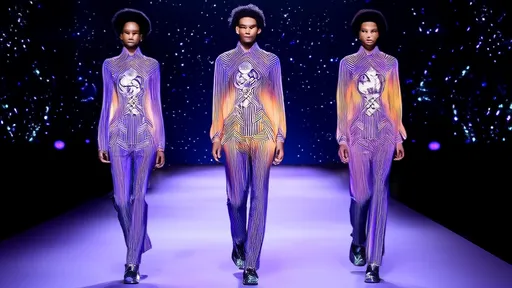
Unlike previous workplace fashion evolutions that unfolded gradually, the transparent clothing movement arrived with disruptive force. Major fashion houses debuted sheer blouses, mesh panel suits, and translucent outerwear during their Spring/Summer 2025 collections, explicitly marketing these pieces as office-appropriate when styled with strategic layering. The trend gained unexpected momentum when several high-profile tech CEOs and creative directors adopted the look during major product launches, declaring it the future of "authentic workplace expression."
The backlash was immediate and visceral. Traditional industries like finance and law have drawn hard lines, with some firms updating dress codes to explicitly ban "garments that reveal skin beyond collar bones and forearms." Meanwhile, progressive companies—particularly in tech, media, and the arts—are embracing the trend as part of broader diversity and inclusion initiatives. This cultural divide has turned office attire into an unlikely battleground for generational and ideological workplace conflicts.
Proponents argue that transparent elements in professional wear represent natural progression in workplace equality. "For decades, women's business attire has been scrutinized and sexualized regardless of coverage," notes fashion sociologist Dr. Elena Rodriguez. "This movement isn't about provocation—it's about normalizing the human form and rejecting the idea that professionalism requires concealing our bodies." Early adopters frequently pair sheer tops with high-necked camisoles or bralettes, creating looks that reveal silhouette without exposing skin, challenging observers to examine why certain fabrics trigger discomfort.
The psychological impact on workplace dynamics remains hotly contested. A recent MIT study found that in creative fields, teams wearing experimental attire reported 22% higher brainstorming output, suggesting clothing autonomy might enhance innovative thinking. However, HR departments across multiple industries report a 37% increase in dress code complaints since the trend emerged. "We're fielding concerns from employees who find the trend distracting or feel pressured to adopt styles that contradict their personal comfort levels," shares a Fortune 500 HR director speaking anonymously.
Material innovation is driving the trend's viability. Tech-infused fabrics now offer opacity that adjusts via smartphone app, while new self-cleaning polymers address hygiene concerns about layered transparent garments. Sustainability factors also play a role—these lightweight, often recyclable synthetics have a smaller carbon footprint than traditional suiting materials. "The environmental argument is convincing younger workers," observes trend analyst Marcus Lee. "They see it as rejecting the wastefulness of fast fashion while making a statement about workplace transparency in every sense."
Global responses reveal fascinating cultural divides. European offices have generally adapted more smoothly, with French and Italian workplaces treating it as an extension of existing fashion-forward norms. Asian markets show stark contrasts—while Japanese offices resist the trend entirely, South Korean Gen Z professionals have embraced customized modest versions. In Middle Eastern business hubs, designers are innovating with transparent overlays on traditional garments, creating culturally specific interpretations.
The legal landscape is scrambling to keep pace. Employment lawyers note a surge in consultations about dress code liabilities. "We're advising clients to focus on measurable workplace disruptions rather than subjective modesty standards," says labor attorney Priya Kapoor. Some companies now require "clothing transparency briefings" to align teams on expectations. Meanwhile, gender-neutral approaches to the trend are testing the limits of existing workplace discrimination protections, with nonbinary employees leading conversations about who gets to define professional presentation.
Psychologists warn against oversimplifying reactions to the trend. "Discomfort with transparent workwear often stems from deeper unease about changing power structures," explains organizational behavior expert Dr. Henry Wu. "When junior staff adopt these styles before leadership does, it disrupts traditional hierarchy signals." This power dynamic reversal may explain why the trend has gained fastest in flat-structure companies and why some executives are suddenly investing in bold transparent statement pieces.
As the movement matures, a middle ground is emerging. Many workplaces are adopting "contextual transparency" policies that vary by role and situation—for example, permitting creative teams more flexibility while maintaining traditional standards for client-facing positions. Designers are responding with sophisticated pieces that play with opacity gradients rather than full transparency, offering compromise options. "The future isn't about sheer versus opaque," predicts Vogue's workplace style editor. "It's about intelligent design that allows individual expression while maintaining collective comfort."
What began as a fashion trend has become a litmus test for workplace evolution in the 2020s. The transparent clothing debate encapsulates larger questions about generational shifts, the erosion of formality, and who holds power to define professional norms. As boundaries between personal and professional identities continue to blur, one thing becomes clear: the office of 2025 won't conceal its complexities behind layers of tradition. Whether this transparency leads to liberation or distraction remains the year's most controversial workplace question.

By /Aug 18, 2025

By Daniel Scott/May 27, 2025
By Rebecca Stewart/May 27, 2025
By Christopher Harris/May 27, 2025
By /Aug 18, 2025
By Jessica Lee/May 27, 2025
By Amanda Phillips/May 27, 2025
By Noah Bell/May 27, 2025

By /Aug 18, 2025
By /Aug 18, 2025
By /Aug 18, 2025
By Megan Clark/May 27, 2025
By Sophia Lewis/May 27, 2025

By /Aug 18, 2025
By /Aug 18, 2025
By David Anderson/May 27, 2025

By /Aug 18, 2025
By Joshua Howard/May 27, 2025

By /Aug 18, 2025

By /Aug 18, 2025
